GLOBAL VOICE FOUNDATION'S Latest Update for the BaAka, Radio France's Radio Ndjoku and Legacy Global!

Greetings Everyone!
Hope this finds you and yours in excellent health!

We wanted to give you the latest UPDATES on Global Voice Foundation's new relationship with Legacy Global Foundation and the BaAka, Louis Sarno’s friends and family in Central African Republic:

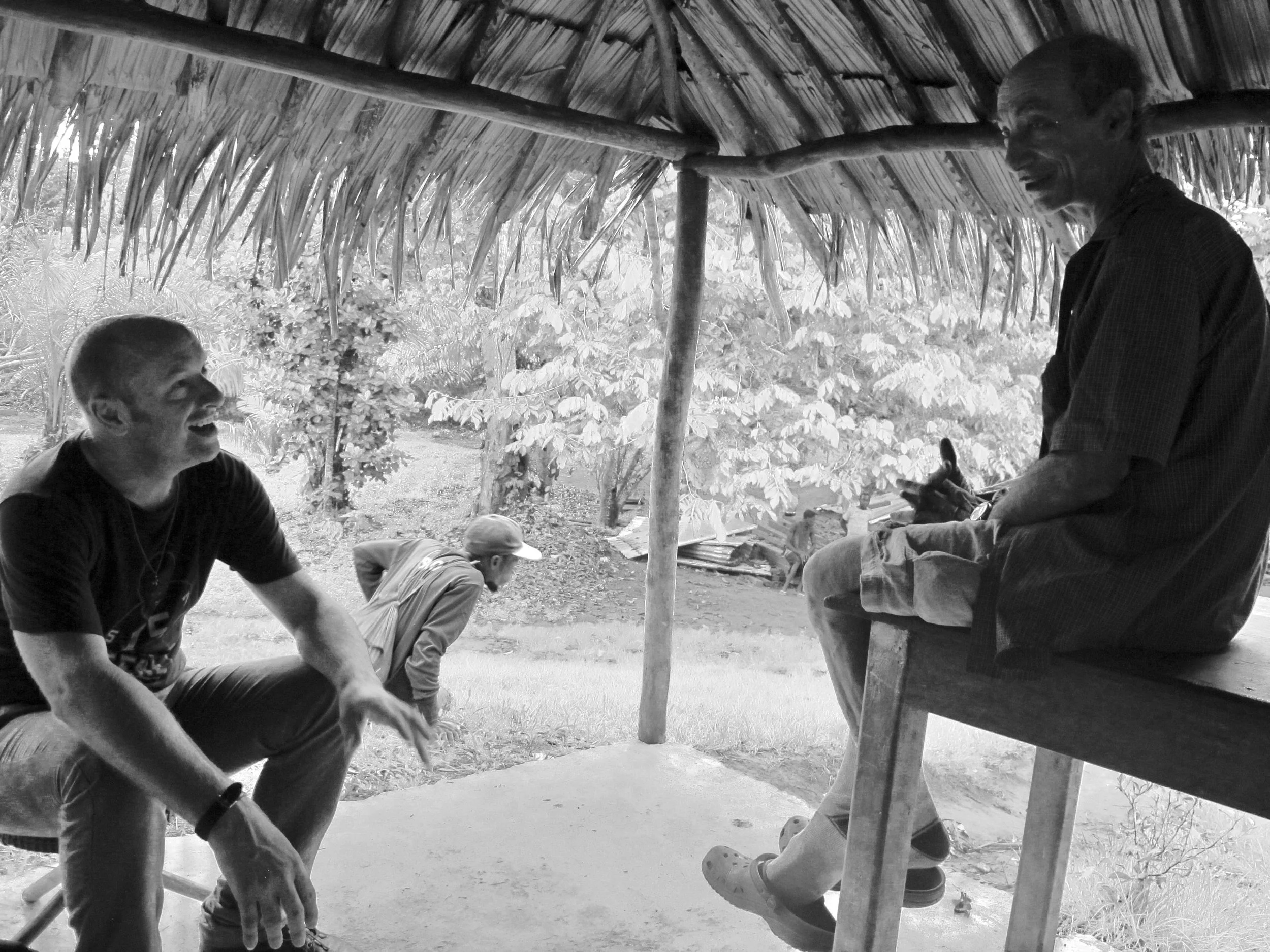
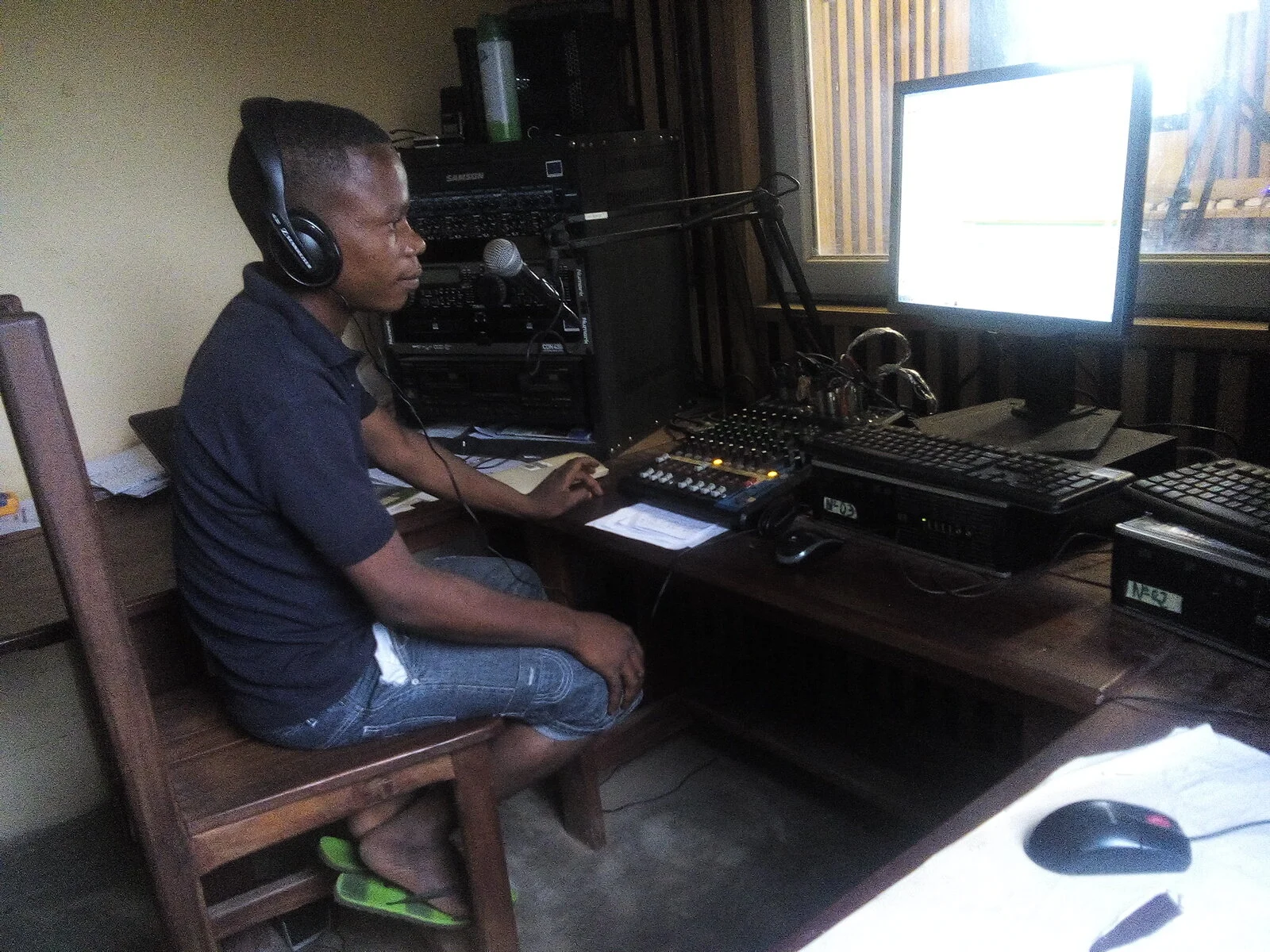
Since 2018, due to your support, we have been supporting Radio France's Radio Ndjoku in the Central African Republic on behalf of Louis Sarno. Presently, through our funding, Louis’ son Samedi is employed as a technician, as well, a young BaAka woman, who tells traditional stories and teaches listeners about medicinal herbs.

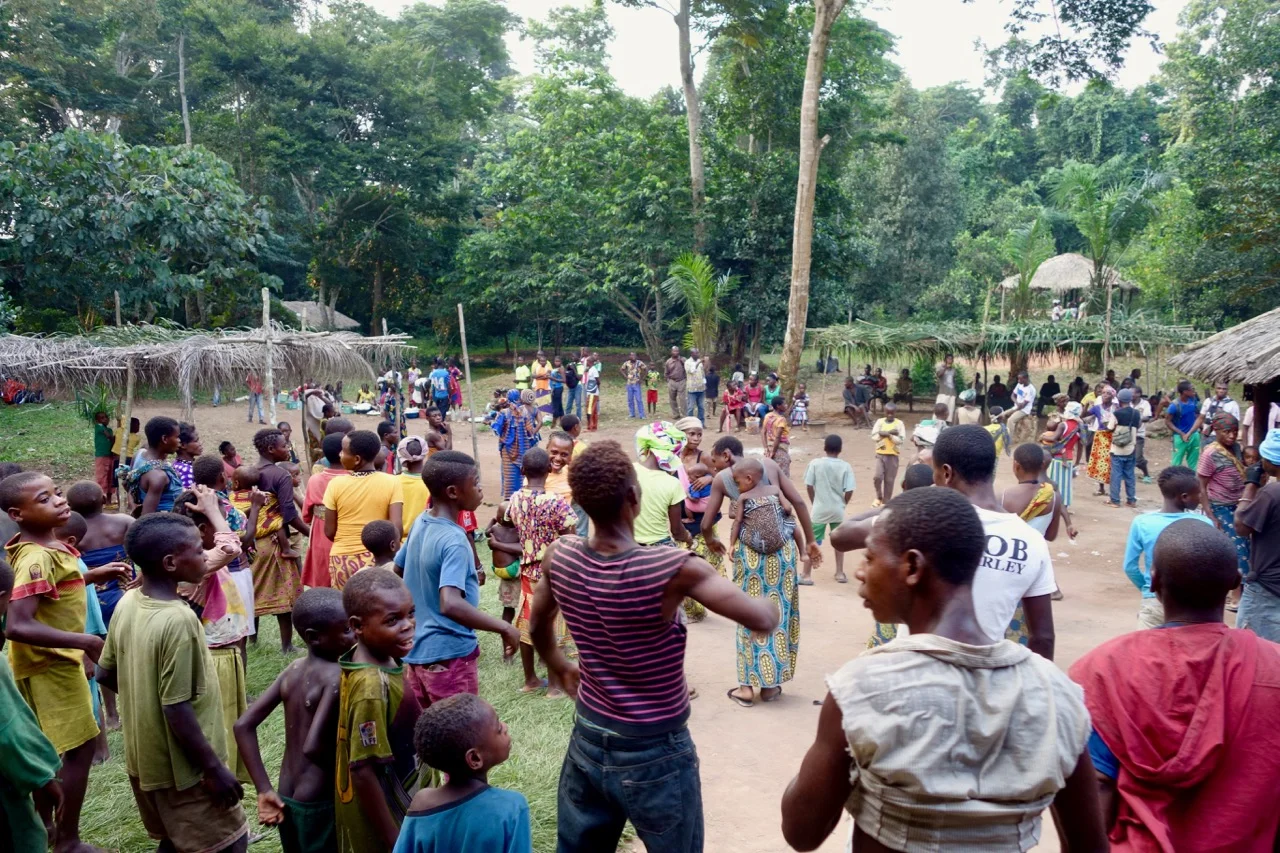
As you are all aware, for over 30 years, Louis recorded and preserved the BaAka music. While Louis was alive the station only possessed seven songs. One of Louis’ dreams was to return their music to them and to have it broadcasted throughout the Central African Republic. Because of your generosity, we have finally succeeded in this mission, as we have been able to deliver to Radio Ndjoku over 1,000 hours of BaAka music through Pitts River Museum in Oxford, England as well as through Epop and Radio France's Max Bale Epop info . For future sales to benefit the BaAka, Max is presently working on a CD of some of the BaAka music Louis recorded in the early days of his adventure in the CAR. We recently came upon these recordings, which are of their Forest ceremonies, through an old roommate of Louis' in Amsterdam, who discovered a box amongst her treasures. Max will be returning these recordings to the BaAka for broadcast on Radio Ndjoku!

Pitts River Museum Louis Sarno's recordings

On GVF website: listen to Louis' recording of the BaAka
In March 2020 Global Voice was informed of a terrible storm which destroyed Radio Ndjoku's antenna. Thomas Martensson, Louis’ missionary friend, was in the area and became very concerned that the radio was not functioning. Besides the sharing of their culture and their music, one of the most important functions of the station is to spread news of dire situations. Without Radio Ndjoku, there was no way to warn the BaAka about the Covid19 virus. Thomas had sadly written to us. “No one cares about the BaAka anymore.”

Oh, but GVF does and thankfully, so do you!

In a short amount of time, we were able to raise enough money to send two men into the BaAka village to warn them of the virus, giving them the correct information to protect themselves. (pictured below with a handheld megaphone) After this warning, many of them returned deep into the forest.

In the meantime, Thomas (a remarkable engineer) offered to do a band-aid repair on the antenna to get it functioning again (pictured below). Global Voice was again able to help, sending money in order for the repairs to be completed. The station is now working and the BaAka are in the range of Radio Ndjoku's transmissions. It will be some time till the antennae can be fully repaired, with a new pylon, which is quite costly. Though we understand this is a difficult time for so many, we will continue to support the station. Anything you can give will help. Please note, our new: Donation page

In December of 2021, we became a part of Legacy Global Foundation's 501c3, in a fiscal sponsorship. We are thrilled to be working with Legacy Global's Michael Glover and Melodie Gatz, who now serves as the Treasurer of our board. PLease note an update of our website with pictures of Louis with our board members Alexis, Sara and Murphy, as well as an individual picture of Melodie. Global Voice Foundation Board

Good news! On the 4th of March, Max Bale will be returning to the Central African Republic to encourage and support everyone at Radio Ndjoku and the BaAka, bringing an abundance of gifts provided by Global Voice: a new GPS system, tents, zoom and recording equipment, tripod, etc (see list below). We're quite thrilled as these gifts will enable the staff to keep in better touch with the villages.


Also, please note we are still supporting the Kalahari Bushmen. Here are some images of the artist Vetkat Kruiper for sale: https://www.fineart-africa.com/vetkat-regopstaan-kruiper

Everyone be safe. And we thank you from the bottom of our hearts.

Warmest of regards,

Alexis Adler, VP

Sara Driver, Secretary

Murphy Lewis, Founder

News from the Central African Republic: Louis Sarno's Return Home (April 2017)

To everyone who made it possible:

After months of preparation and a whirlwind welcome in Bayanga, at last Louis has made it home, and those (Wah Mohn, Thomas and Joakim Martennson) who brought him have each returned safely, though not without those inevitable stretch marks from soul expansion.   

Louis was celebrated by a hybridized ceremony of BaAaka and local Bantu cultures, where everyone from the Mayor to the BaAaka Chiefs were present to honor him. He was interred into a stone structure that took several sleepless nights to build and which will stand for generations to come. It is perhaps one of the best burial sites in the country.

After living there for 30 years, there formed a complex co-dependent situation which was both rare and beautiful. Yet without him, it is unsustainable. In his wake, Yandoumbe is going through a tough transitional phase. But only through losing him can they push towards independence.

For the BaAaka the ashes functioned as Louis' body and were buried as so. They provided closure for their grieving which began in early April. Expectations were extremely high in Bayanga for our continued support. Despite only six full days we were able to move forward with the water pump (checked that it is functioning and scheduled its future maintenance) and assess access to medication. After visiting the hospital and meeting the traveling doctor, we are now working on inserting Yandoumbe into his assigned locations. 

For all of you who made this journey possible, I want to thank you for making all this possible. We are eager for Yandoumbe to achieve total self-reliance, but the road is long. Though we want to avoid dependence, the contradiction is that to prevent this community and Louis' son Samedi from spiraling, our support is still needed. As a tribute to Louis, let us stay connected to his distant friends and family in the forest. Through wise action, we can help facilitate this new phase in their lives.  

Below is the link to the video. It is not public, but you can access it through this link.

https://vimeo.com/227644478/09b85694c8

We recommend watching it in 1080p (click the HD button to select this).

Love to everyone,

Wah Mohn 

and the Global Voice Team, Sara Driver, Alexis Adler, and I. Murphy Lewis

We've joined forces with Radio France's Radio Ndjoku in the Central African Republic!

Since Louis Sarno’s death, Global Voice Foundation joined forces with Radio France’s Radio Ndjoku to broadcast the BaAka’s music, which was recorded by Sarno for over 30 years. From 2019 to 2021 years, with the help of our funders we’ve been providing the salary for Béatrice Babona and Louis Sarno’s son, Samedi (see photos below). In his book Song from the Forest (Houghton Mifflin, 1993) Sarno wrote of his life amongst the BaAka. Under the same title, Director Michael Obert created a film of Sarno’s life featuring Jim Jarmusch (2013). See the trailer on Youtube. In 2011, Director Lavinia Currier filmed Oka! in the heart of the Central Africa Republic about Louis life played by Kris Marshall. See the trailer on Youtube. Yes, people have been that fascinated with Sarno’s life.

News from the Central African Republic: Louis Sarno's Return Home

To everyone who made it possible:

After months of preparation and a whirlwind welcome in Bayanga, at last in July Louis made it home, and those (Wah Mohn, Thomas and Joakim Martennson) who brought him have each returned safely, though not without those inevitable stretch marks from soul expansion.   

Louis was celebrated by a hybridized ceremony of BaAaka and local Bantu cultures, where everyone from the Mayor to the BaAaka Chiefs were present to honor him. He was interred into a stone structure that took several sleepless nights to build and which will stand for generations to come. It is perhaps one of the best burial sites in the country.

After living there for 30 years, there formed a complex co-dependent situation which was both rare and beautiful. Yet without him, it is unsustainable. In his wake, Yandoumbe is going through a tough transitional phase. But only through losing him can they push towards independence.

For the BaAaka the ashes functioned as his body and were buried as so. They provided closure for their grieving which began in early April. Expectations were extremely high in Bayanga for our continued support. Despite only six full days we were re able to move forward with the water pump (checked that it is functioning and scheduled its future maintenance) and assess access to medication. After visiting the hospital and meeting the traveling doctor, we are now working on inserting Yandoumbe into his assigned locations. 

For your donations towards this endeavor, we want to thank you. We are eager for Yandoumbe to achieve total self-reliance, but the road is long. Though we want to avoid dependence, the contradiction is that to prevent this community and Louis' son Samedi from spiraling, our support is still needed. As a tribute to Louis, let us stay connected to his distant friends and family in the forest. Through wise action, we can help facilitate this new phase in their lives.  

Below is the link to the video. It is not public, but you can access it through this link.

https://vimeo.com/227644478/09b85694c8

We recommend watching it in 1080p (click the HD button to select this).

Love to everyone,

Wah Mohn 

and the Global Voice Team: Sara Driver, Alexis Adler, and I. Murphy Lewis 

Note: there are nine photos below, just press and it will flow through each one.

Notes from Chhattisgarh

In Eastern India, the Bonda tribal women come down from their tiny remote villages for the weekly market at Jeypore. They are rarely seen, and are one of India’s most ancient and primitive tribes. Some 5,000 live at the junction of Orissa, Chhattisgarh and Andra Pradesh in inaccessible parts of the lush hills.    Nearby Bastar, a beautiful forested plateau is home to many different tribes.  Each one has its own distinct culture, eating habits, dialect, customs, gods and goddess. Religious beliefs are expressed through votive terracotta offerings and reciting tribal epics with singing, dance and painting. In the past decade large mining corporations have been excavating the mountains around, many of which are deemed sacred by the tribal people who have very little sway in the capitalist greed of present day India. These fascinating people are losing their way of life so fast, having been living this same way for hundreds of years. 

Post and Two Photos (press on first photo to view second) from our Associate, Sara Stewart

Inside the African pygmy tribe battling for survival deep in the disappearing rainforest

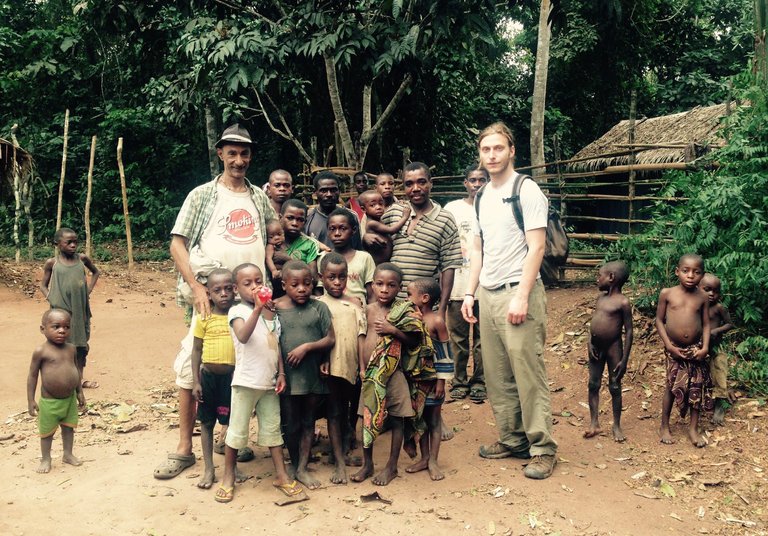
Known as the Baka, or locally in Congo as Bayaka, people, the tribe lives in west and central Africa. Living in the dense rainforest has given the Baka people has made them adapt to climate's challenges, but half of children are dead by the age of five. 

Photographer and freelance journalist, Susan Schulman, spent a few days with the tribe in February 2016. Schulman's interest in the pygmy tribe came about after hearing about Louis Sarno, who has spent the last 30 years living with the Baka people in the Central African Republic and serving as their doctor.

Read full article at dailymail.co.uk

Inside the world of Louis Sarno, The Pygmy Chief from New Jersey

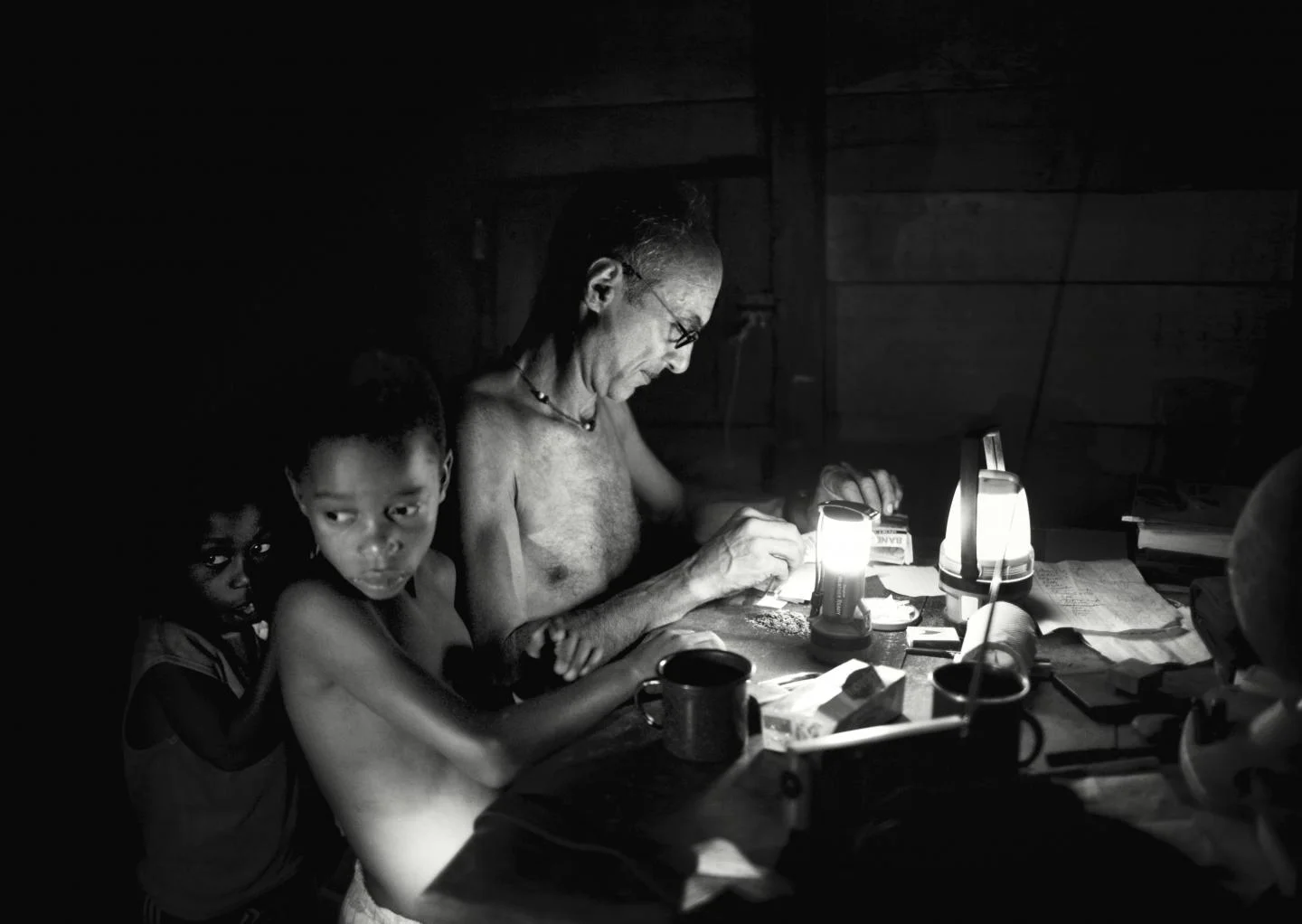
Louis Sarno is a dear acquaintance of mine for many years that Global Voice has been supporting since 2002 (he had been living with the Pygmies in the Congo for 30 years).

"Louis Sarno has described many times what led him to the rainforest, including in a tight précis at the start of his 1993 memoir Song From The Forest – My Life Among The Ba-Benjellé Pygmies. “I was drawn to the heart of Africa by a song,” the book begins..."

Read the full article at Newsweek.com

The Last Lioness: Lady and Herbert

"A haunting call echoes across the Liuwa Plain. There is no answer, there hasn't been for years. She has no pride, no support - she alone must safeguard her own survival. Her name is Lady Liuwa, and she is the Last Lioness.

Isolated by a scourge of illegal trophy hunting that wiped out the rest of her species in the region, Lady Liuwa is the only known resident lion surviving on Zambia's Liuwa Plain. For four years, cameraman Herbert Brauer watched her lonely life unfold, until, in her solitude, she reached out to him for companionship.

But Herbert knows he is not the companion this lonely lioness needs - she should be amongst her own kind. Now, in May of 2009, plans for a male lion translocation have come through, and there is hope for ending her isolation. Lady Liuwa will no longer be the Last Lioness - find out how she copes as lions return to her plain for the first time in over five years."

Watch Video

Director of Photography
HERBERT BRAUER (the photographer who worked with Global Voice on Music that Floats From Afar and Notes from Afar)

Small People. Big Trees.

"The Republic of South Africa. Here in the shade of sub-panel rainforests lives a tribe of the shortest people on Earth - the Baka pigmies. As it was hundreds years ago they hunt for meat and gather gifts of big trees. They pray to the spirits of the forest and teach their children to respect the forest, to take from it only what is of great need. But little by little their traditional mode is changing under the pressure of the "Big World" culture."

Watch the full documentary on Youtube

Opening our minds to Indigenous Issues

Gonzalo Oviedo

Gonzalo Oviedo is the person every conservationist dreams of sitting next to at a dinner party. He hails from Ecuador and has worked and traveled pretty much everywhere from the remotest part of the Galapagos Islands to the most northerly corner of Russia. IUCN's Senior Advisor for Social Policy, we caught up with Oviedo to ask him about his tireless work with Indigenous Peoples.


What’s the best IP project you have seen put together? 

"There are many excellent projects with Indigenous Peoples. One of my main areas of attention, because of my old-time interest in education, is inter-generational cultural connections. Indigenous peoples in most cases (as everyone in the world) are undergoing rapid cultural change, with the good and the bad effects of it. How indigenous children and youth experience their own culture – their traditional knowledge, practices and institutions? How do they embrace them? Will they continue with their value systems? These are questions that I am not alone in wondering about – they are the questions that I often hear from indigenous elders, who greatly worry about the future of their cultures. In this context, some of the projects that I remember and value most are projects focusing on the youth. In a remote forest area of Southeast Asia, a project organized periodic “forest expeditions” bringing together the elders - traditional experts in forest-related knowledge, with groups of youth who were normally attending schools (where they don’t learn about traditional knowledge). Over a week or so, the “forest expeditions” were a living school on traditional forest knowledge, and an opportunity for transmission of values and inter-generational bonding. In central Africa, a project works with young indigenous Bayakas to help them “reconnect” with their cultures, take pride of them and enhance their capacity to interact with the broader society – I follow this project with great interest. I really think these experiences speak to the future of indigenous cultures, and we should be doing more of this." – Gonzalo Oviedo

The Land of No Men: Inside Kenya's Women-Only Village

Where the foothills of Mount Kenya merge into the desert, the people of Samburu have maintained a strict patriarchy for over 500 years in northern Kenya. That is, until 25 years ago, when Rebecca Lolosoli founded Umoja village as a safe haven for the region's women. Umoja, which means "unity" in Swahili, is quite literally a no man's land, and the matriarchal refuge is now home to the Samburu women who no longer want to suffer abuses, like genital mutilation and forced marriages, at the hands of men.

Throughout the years, it has also empowered other women in the districts surrounding Samburu to start their own men-excluding villages. Broadly visited Umoja and the villages it inspired to meet with the women who were fed up with living in a violent patriarchy.

Source and credit: Broadly